VISNIB VISNIB

Blog Resource Center

Explore the latest industry insights, product updates, and best practices to help your business grow

Why 85% of AI Projects Fail: The Real Reasons Behind the Statistic

Why 85% of AI Projects Fail: The Real Reasons Behind the Statistic

A team spends eight months building a recommendation engine. In testing, it achieves 94% accuracy — the model correctly predicts what users will click, what they'll add to cart, and when they're about...
The 10‑20‑70 Rule for AI: What It Means and Why Data Dominates

The 10‑20‑70 Rule for AI: What It Means and Why Data Dominates

A few years ago, I watched a team of engineers spend six months optimizing a neural network architecture for a supply‑chain forecasting model. They tried different layer depths, adjusted learning rate...

Elon Musk’s Definitive Statements on AI: Warnings, Predictions, and What They Mean

Elon Musk’s Definitive Statements on AI: Warnings, Predictions, and What They Mean

In 2014, during a public interview at MIT, Elon Musk said something that sounded alarmist at the time but now reads like a premonition: artificial intelligence could be “more dangerous than nuclear we...

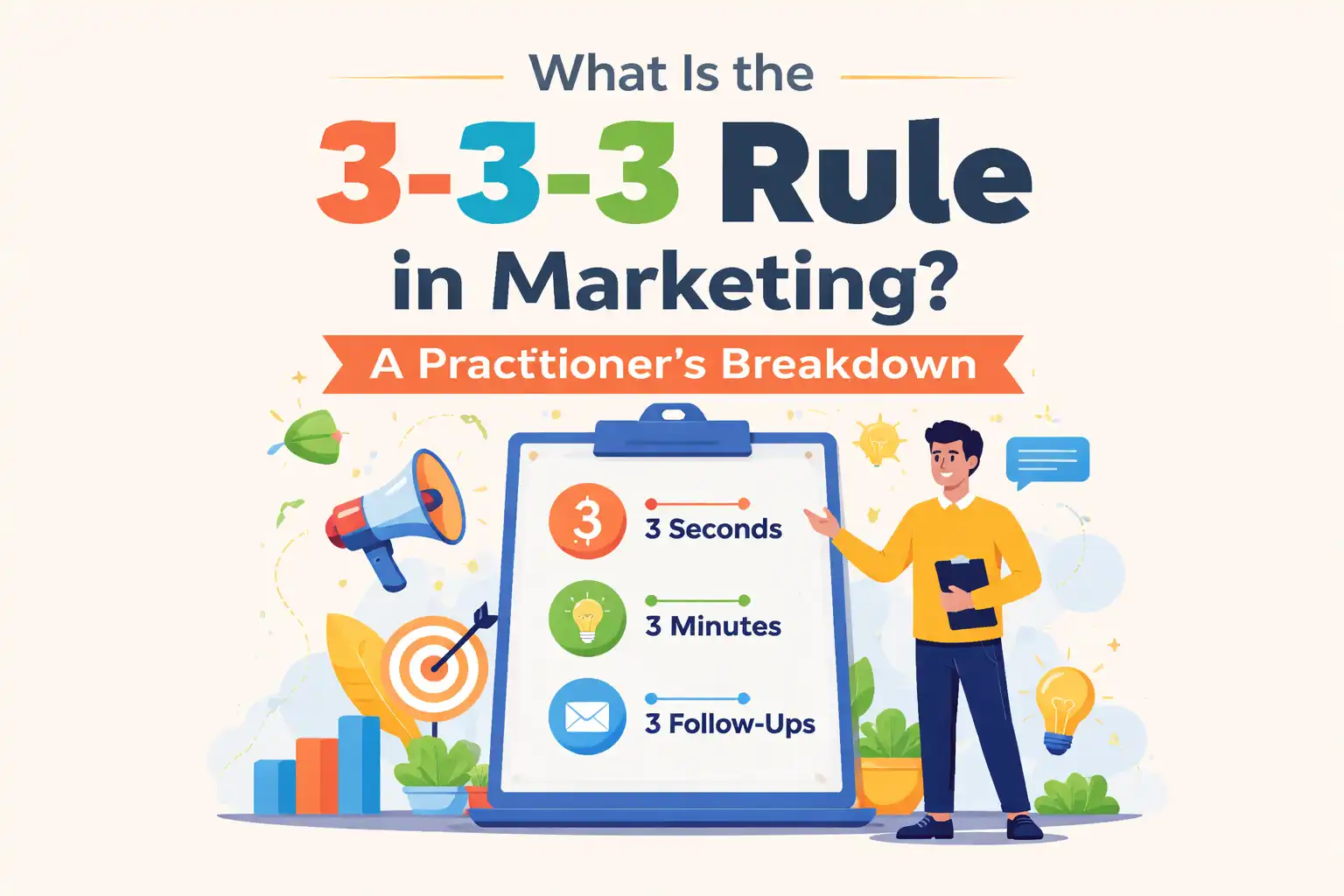
What Is the 3-3-3 Rule in Marketing? A Practitioner's Breakdown

What Is the 3-3-3 Rule in Marketing? A Practitioner's Breakdown

The 3-3-3 rule in marketing is a framework that dictates you have three seconds to grab attention, three seconds to deliver value, and three seconds to drive action. It originated in advertising but n...

Can a Beginner Do SEO? What It Really Takes to Compete in 2026

Can a Beginner Do SEO? What It Really Takes to Compete in 2026

You set up a blog, spent a weekend reading SEO guides, optimized title tags, wrote a few posts, and waited. Three months later, your traffic dashboard still shows single digits. The frustration is rea...

How to Choose an AI Visibility Tool That Actually Works for Your Products

How to Choose an AI Visibility Tool That Actually Works for Your Products

The moment usually hits after a quarterly traffic review. Product pages are clean. Schema validates. Rankings in traditional search look acceptable. Then someone pastes a product URL into ChatGPT and ...

What Does AI Visibility Mean? A Practitioner's Definition for Ecommerce and SaaS

What Does AI Visibility Mean? A Practitioner's Definition for Ecommerce and SaaS

A DTC furniture brand spent eighteen months optimizing product pages. Metadata was clean. Core Web Vitals passed. Backlinks accumulated steadily. Yet when the team asked ChatGPT to recommend ergonomic...

Is SEO Dead in 2026? Here's What Actually Changed

Is SEO Dead in 2026? Here's What Actually Changed

In early 2026, I watched a product page that had held Google's top three for nearly three years stop generating organic inquiries. The traffic hadn't disappeared—it was still there, trapped inside AI overviews. Users got their answer, including a product recommendation, without ever clicking through. No session, no add-to-cart, no conversion. That moment forced a shift in how I think about search visibility. The question isn't whether SEO is dead. It's which parts still work and what operators need to build next..

How to Get Noticed by AI: A Practical Strategy for Ecommerce Brands

How to Get Noticed by AI: A Practical Strategy for Ecommerce Brands

Most ecommerce brands wake up one day to find that ChatGPT, Perplexity, or Google AI Overview answer a customer's search query without ever mentioning their product. The page ranks well in traditional...

ChatGPT vs Google AI Overview: Which AI Search Engine Serves DTC Brands Better?

ChatGPT vs Google AI Overview: Which AI Search Engine Serves DTC Brands Better?

A DTC brand manager refreshes the product catalog, publishes a new line of ergonomic chairs, and waits. A week later, they ask ChatGPT for recommendations for "best office chair under $500" — their product appears third in the conversation. They run the same query through Google’s AI Overview. Nothing. Not even a mention. No product snippet, no citation, no link. The brand is invisible in one engine and visible in another. This uneven visibility isn’t a glitch. It’s a structural feature of how the two AI systems retrieve and rank ecommerce content. Understanding that structure — and the gap between what each engine values — is the difference between showing up in AI search results and staying hidden.

What Determines Whether ChatGPT Recommends Your Product

What Determines Whether ChatGPT Recommends Your Product

You launch a product, invest in product page content, and check the usual SEO metrics. Everything looks fine. Then a customer asks ChatGPT for a recommendation in your category, and the AI lists three competitor products without mentioning yours. This scenario plays out across hundreds of ecommerce stores every day. The fundamental issue is not product quality or pricing—it is how AI systems read, interpret, and retrieve product information differently than traditional search engines.

AI Visibility Is Not What You Think It Is

AI Visibility Is Not What You Think It Is

Anyone who has spent the last two years watching search traffic patterns knows something fundamental has shifted. Organic clicks from traditional search results have been declining steadily, not because users are searching less, but because an increasing number of queries never make it to a result page. AI-generated answers, conversational summaries, and citation-based responses are intercepting searches before they reach conventional listings. The question I keep hearing from SaaS teams and ecommerce operators is not whether this matters — it’s whether there is anything they can actually do about it.

Recommended Reading

Ready to Get Started?

Experience our product immediately and explore more possibilities.